

Opening doors: my year at Strathclyde from pub shifts to systems change
By Nastya Gavrilova - Posted on 1 July 2026
Nastya Gavrilova is an MSc International Human Resource Management student but has taken Strathclyde's entrepreneurial ethos to her heart, winning in the Exploring Entrepreneurship Challenge and now part of the Converge Challenge's Kickstart programme with start up Stuffshare.
Our wins are never our own. Every one of them starts with someone deciding you are worth an opportunity. That has been the thread running through my whole year at Strathclyde, so it feels right to start there.
Before the MSc
Before Strathclyde I completed my BSc in Environmental Geoscience at the University of Edinburgh while working at a pub. When I was promoted to shift leader, someone decided I was worth a chance, and it opened a door into business operations. I learned how rotas, stock, and people fit together, and I found I loved looking at how the pieces of a system interact and where a small change can unlock the flow of everything else.
Why International HRM, and why Strathclyde
I chose HR because people management is fundamental to changing any system, and the change the climate crisis demands is messy, interconnected, and above all human. My geoscience degree gave me the environmental foundation. What I was missing was the human side: how organisations operate, who makes decisions, and how culture shapes those decisions. The MSc in International Human Resource Management at Strathclyde Business School filled that gap, giving me broader business tools like STEEPLE alongside performance management, change management, and the realities of working across cultures. Strathclyde calls itself a place of useful learning, and it walks the talk.
What stood out
The Global Innovation Spring course was the most energising and thought-provoking part of the programme. Its modules covered wicked problems, global supply chains, and the circular economy, and it all clicked together with Kate Raworth's Doughnut Economics and its case for economies that are regenerative and distributive by design.
The programme’s focus was practical and I liked that. We worked on existing problems facing organisations across different sectors and countries, from group projects on multinational expansion to an organisation-based dissertation at a startup, applying knowledge within real life context. Some debates stayed with me too: convergence versus divergence, the contested effects of globalisation, and best fit versus best practice, which resurfaced questions and assumptions I had before the MSc.
Strathclyde Inspire as a catalyst
Strathclyde Inspire has been the catalyst of my year, one domino setting off the next. Through it I took part in the Exploring Entrepreneurship Challenge, where our team pitched ClydeCash and won. ClydeCash has now wrapped, but it taught me a huge amount - from the business model canvas to pitching - and I got to work with some incredible people along the way. And the doors kept opening: to Collide, where I met the start-up I am now working with for my dissertation; an internship with Cambio, thanks to another person who believed in me; and the Strathclyde Inspire Ambassador role, which gave me a network, support, and access to the buzzing spaces where ideas get built. SBS and Inspire have been there at every step, from pitch training to being the people who keep deciding students are worth an opportunity.
StuffShare, my circular economy sharing platform, is where all my energy goes, and the dominoes reached it too. Through EEC I learned about Converge, and we are now part of its Kickstart programme, have made it into the Santander X Awards, and are working towards a campus soft launch in September.
StuffShare and what comes next
StuffShare is an experiment, a challenge, a dare if you wish. We all hold different amounts of time, knowledge, and skills, and different items collecting dust, and none of it needs to be converted into money before it can be shared, redistributed, and enjoyed. StuffShare asks what makes a good life beyond infinite consumption, and how we stop depleting the natural resources we all depend on.
Before you can expect change, you first have to set up the environment for it: remove the obstacles, build the pathway, equip people with tools. StuffShare takes the same approach. Nobody likes wastefulness, yet it is embedded in our systems at every level, so the work is to find where we have built dams that block the flow and start taking them down.
If I had to sum up this year in one line, it was about learning how to create value. I bring an unusual toolkit to that work: running pub operations, studying how people and organisations work across cultures, and understanding the planet we are doing it all on, with entrepreneurship as the most fulfilling learning curve of all. My plan is to keep building systems that make sustainability easy, whether that is operations in a pub or the flow of dusty items through a digital platform: find the leverage points, unlock the flow.
And StuffShare is a stepping stone. It is an invitation to accelerate the shift towards redistributive and regenerative systems instead of ones that make overconsumption inevitable, and a step towards a bigger, more hopeful question: what does a post-capitalist society look like?





About Nastya Gavrilova
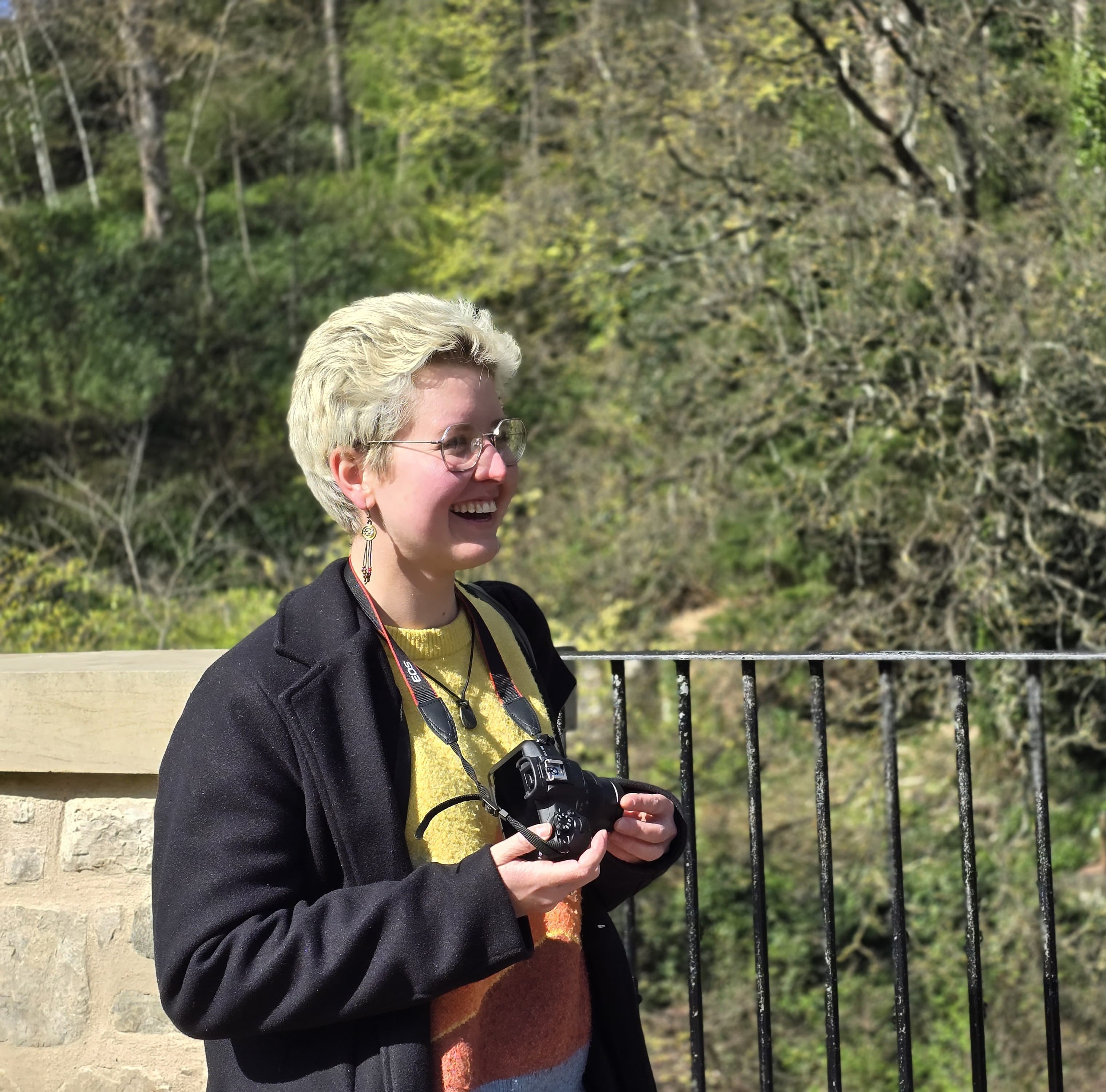
Nastya Gavrilova is the founder of StuffShare and an MSc International Human Resource Management student at Strathclyde Business School, with a BSc in Environmental Geoscience from the University of Edinburgh. Nastya is focused on the climate crisis and the shift to a sustainable future, working on systems thinking anchored in operations and management.

